
Anton James
In Sri Lanka, autism remains poorly recognised. Despite global progress in acknowledging neurodiversity, many families still face stigma, misdiagnosis, or limited access to appropriate services. No valid or reliable national data exists on autism prevalence, and some professionals in health and education have limited knowledge about it. Professionals often refer to integration when they mean inclusion – revealing a deeper lack of understanding of inclusive principles.
Another urgent issue – environmental degradation – also struggles to gain lasting public engagement. Beaches across the island, including those in urban centres, are often littered with plastic and polythene waste. Sea turtles and other marine life are visibly affected, yet most conservation efforts remain limited to one-off clean-up events with little long-term impact.
These two challenges – autism inclusion and environmental protection – are typically addressed in isolation. However, in 2023, a new grassroots initiative called Merak set out to bridge them. From this effort emerged a new concept: Inverdia – a model of action based on the belief that inclusion and environmental consciousness are more effective when pursued together.
What is Inverdia?
The term Inverdia blends inclusion with verde, the Latin word for green. It represents the belief that communities become more just, equitable, and sustainable when they combine inclusive practices with environmental responsibility.
Children with neurodevelopmental differences often face environmental exclusion: they may have limited access to green spaces, face physical barriers in public infrastructure, or be overlooked in community sustainability efforts. Similarly, environmental movements can unintentionally miss neurodivergent perspectives, losing the opportunity to involve all citizens in environmental action.
Importantly, both inclusion and environmental sustainability are rooted in shared values – compassion, care, empathy, and justice. These values can underpin initiatives that build understanding and participation across community groups.
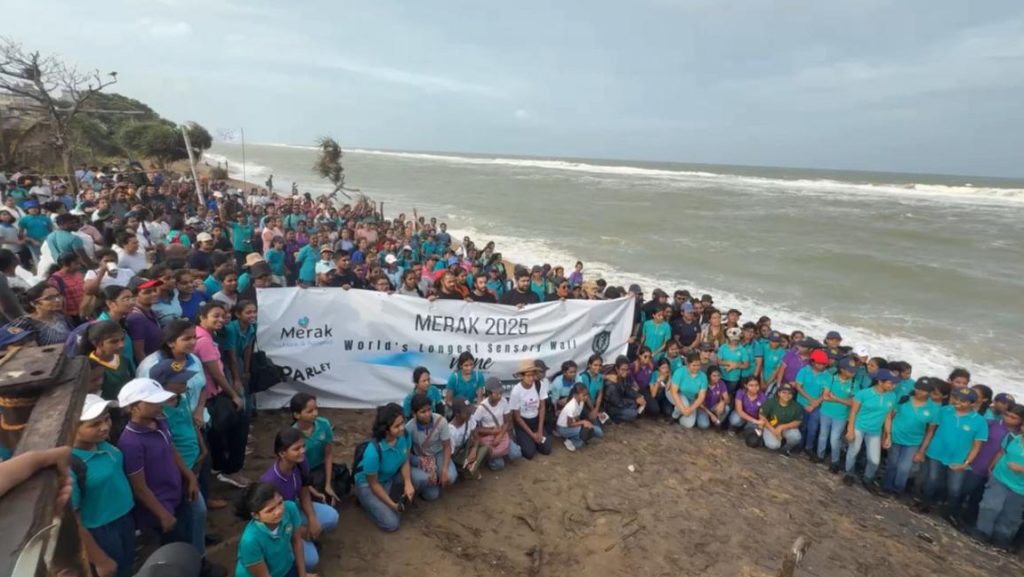
Merak: A case study in Inverdia
Merak was created to bring Inverdia to life. Its name, taken from Serbian, refers to the joy found in life’s simplest pleasures – an apt metaphor for how many neurodivergent children engage with the world, particularly through sensory play and exploration.
We held the first Merak event in 2023 along Mount Lavinia Beach; the largest autism awareness event in Asia, attracting over 1,500 participants. Its dual purpose was unique: some volunteers came to clean the beach, others to support autism awareness. Many left having engaged in both. Sensory play zones, awareness booths, and inclusive activities were embedded alongside the clean-up, creating an integrated experience for the entire community. This was Inverdia in action: a blended approach that organically broadened its reach, connecting causes and communities that rarely intersect.
The power of blending causes
Traditional autism awareness events in Sri Lanka – such as symbolic walks or community talks – often attract those already engaged with neurodivergence advocacy. Environmental clean-ups draw people committed to sustainability, but often unaware of inclusive practices. Inverdia bridges this divide.
Merak succeeded by welcoming a more diverse group of participants. Families of autistic children felt seen and valued in a safe, inclusive space. At the same time, students, teachers, diplomats, government officials, and business leaders participated in the clean-up – many discovering autism awareness for the first time. Inclusion, once seen as a niche or clinical concern, became a shared civic value.
The world’s longest sensory wall
After the success of the initial event, the Merak team sought a more lasting legacy. While one-day events generate enthusiasm, their impact often fades. This led to an ambitious project: building the world’s longest sensory wall, using recycled waste from beach clean-ups. Sensory walls support autistic individuals in self-regulation and sensory exploration. Typically, they are confined to therapeutic or educational settings. In contrast, the Merak wall will be a public installation, constructed from materials gathered across Sri Lanka.
This is not just a world record attempt, it is a symbolic structure. Each panel tells a story of environmental healing. Each sensory element affirms the right of neurodivergent children to engage with the world in their own way.
Why Inverdia matters
Inverdia has far-reaching implications for educators, NGOs, government stakeholders, and corporate partners:
- It reframes inclusion: No longer seen as a specialist or medicalised concept, inclusion becomes a public value – tangible, visible, and participatory.
- It broadens engagement: Inverdia-themed activities reach beyond typical audiences, creating bridges between sustainability and neurodiversity communities.
- It creates legacy: From the sensory wall to inclusive clean-up events, the outcomes endure – both physically and in public awareness.
- It enhances sponsorship potential: Businesses often align with either inclusion or environmental efforts. Inverdia provides an integrated framework, increasing relevance for more diverse corporate social responsibility goals.
- It is replicable: Merak began without major funding or large international partnerships. Its success rests on low-cost, creative, and collaborative principles, accessible to any community. Another charity, Theeraniyam, conducted a similar beach clean-up project to raise awareness of autism.
A path forward
Merak has grown into a registered charity. Satellite events have taken place across Sri Lanka, from rural village initiatives to inclusive clean-ups at the British High Commissioner’s residence. Each activity continues to demonstrate the power of Inverdia as a replicable, scalable, and community-led model.
In 2026, Merak will evaluate the outcomes of its Guinness World Record attempt and make strategic plans for expansion and collaboration. The team has engaged sponsors to support the next initiative: a Guinness World Record attempt for the largest coral planting event in the world (Maldives, 2027) as part of a regional autism awareness campaign.
Inverdia is about connection: between people and place, inclusion and sustainability, and the overlooked and the empowered. It shows that inclusion and environmental action do not compete – they complement, strengthen, and elevate one another through compassion-led participation.
Anton is a psychologist specialising in autism, based in Sri Lanka. Contact: thetreehouseinternational@gmail.com